How to Declutter for Estate Cleanout in Howard County? Step-by-Step Guide
To declutter for an estate cleanout in Howard County, start by locating critical legal paperwork and family heirlooms before touching regular household items. Next, sort belongings room by room using four clear categories: Keep, Donate, Sell, and Trash. Starting with low-emotion rooms like attics or basements keeps the process moving quickly and cuts down on final hauling costs.
Clearing out a home after losing a loved one or preparing an aging parent for downsizing is one of the toughest projects you will ever face. When you walk into a house in Columbia, Ellicott City, or Clarksville filled with forty years of furniture, paperwork, and memories, feeling overwhelmed is completely normal.
At JT’s Junk & Trash Removal, we help families across Maryland work through this exact challenge every week. Here is our practical, field-tested guide on how to organize an estate cleanout without burning out.
Step 1: Secure Vital Paperwork and Valuables First
Before you pack a single box of kitchenware or call a hauling truck, you must locate personal records. Paperwork is often tucked away in unexpected hiding spots like under mattress corners, inside freezer bags, behind desk drawers, or slipped between book pages.
Take a dedicated afternoon to search for and secure:
- Legal Documents: Wills, trusts, power of attorney records, marriage certificates, and military discharge papers (DD-214).
- Financial Records: Real estate deeds, vehicle titles, stock certificates, bank statements, tax returns from the last three years, and insurance policies.
- Small Valuables: Jewelry, coin collections, family heirlooms, stamps, cash, and family photo albums.
Keep all of these items in a secure plastic bin and take them to your own home or a bank safe-deposit box immediately. This prevents accidental disposal when other family members or contractors start moving through the house.
Step 2: Set Up the 4-Category Sorting System
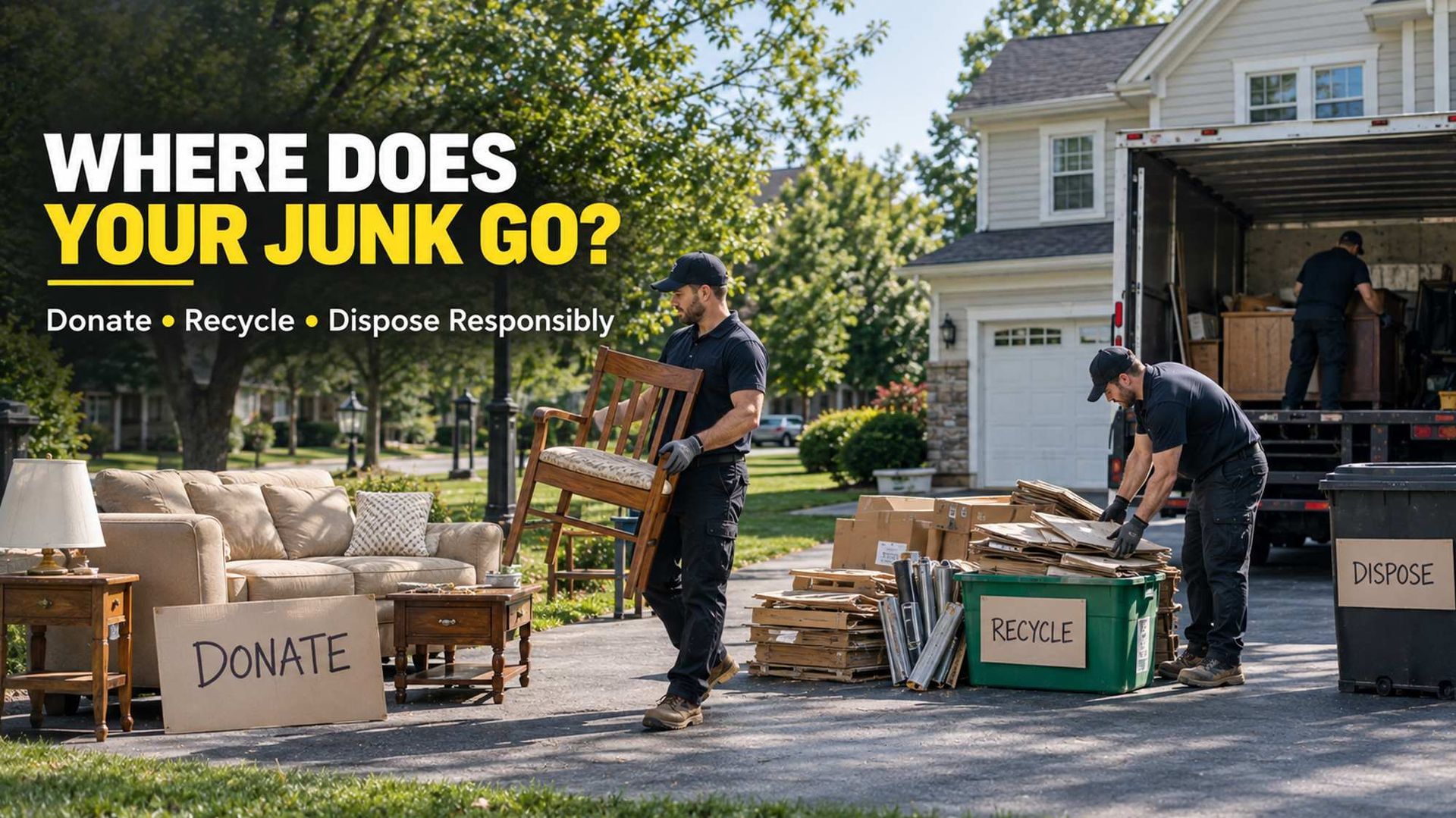
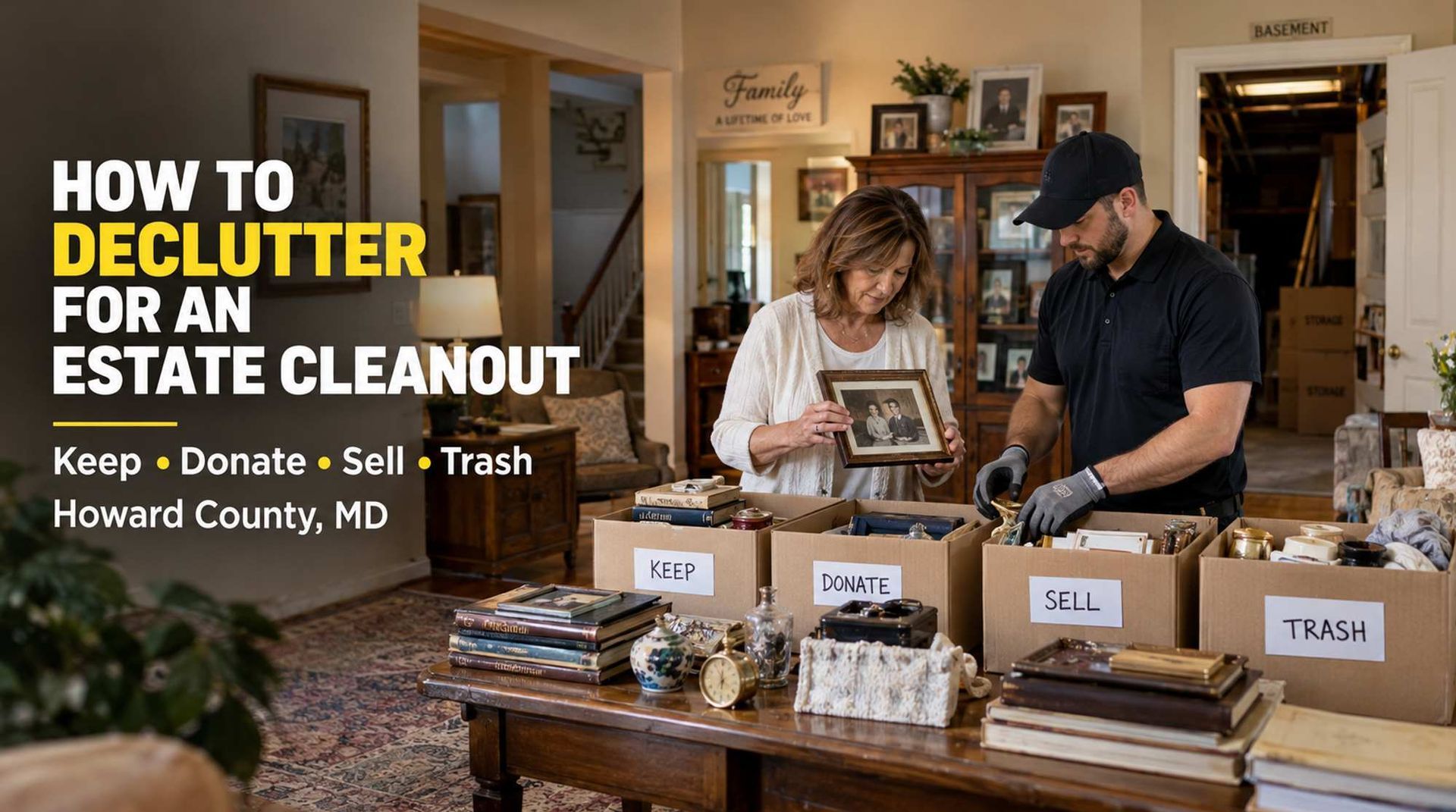
When you begin sorting estate items, decision fatigue sets in fast. The easiest way to keep momentum is using the classic four-category system. Designate a staging area, like an open garage or the center of the living room, and clearly label four zones:
- Keep: Belongings staying with immediate family or heirs.
- Sell: High-value furniture, antiques, collectibles, or quality tools suitable for an estate sale or consignment.
- Donate: Clean clothes, working small appliances, unbroken dishware, books, and gently used furniture.
- Trash/Recycle: Damaged items, broken furniture, expired foods, worn-out mattresses, and general debris.
Use colored painter's tape to tag large furniture so you do not have to carry heavy items multiple times. For example, green means keep, blue means donate, and red means disposal.
Step 3: Work Room-by-Room (Start with Low-Emotion Spaces)
One of the most common mistakes people make when decluttering a deceased parent's house is starting in the master bedroom or the living room. These spaces contain high-emotion keepsakes that can stall your progress in minutes.
Build your confidence and momentum by starting with low-emotion utility spaces:
- The Laundry Room and Bathrooms: Tossing expired medications, half-empty cleaning bottles, and old towels requires zero emotional energy.
- The Kitchen and Pantry: Check expiration dates on canned goods, clear out broken kitchen gadgets, and set aside everyday cookware for donation.
- The Garage, Attic, and Shed: These areas hold tools, gardening gear, holiday decorations, and outdoor furniture. They take physical effort to clear, but they rarely trigger emotional stalls.
- Bedrooms and Living Areas Last: Save personal closets, scrapbooks, and family rooms for the end, once you have already cleared large volumes of general clutter from the rest of the property.
Step 4: Donate and Sell Before Scheduling Final Disposal
Do not pay a hauler to take away items that still hold value or could help someone in need. Howard County has several excellent avenues for rehoming used belongings:
- Furniture and Building Materials: The Habitat for Humanity ReStore in Columbia accepts gently used sofas, dining sets, cabinets, and working appliances. Donating here keeps usable furniture out of the landfill and supports local housing programs.
- Clothing and Household Goods: Local thrift stores, shelters, and community outreach programs in Elkridge and Ellicott City readily accept boxed clothing, shoes, kitchenware, and linens.
- Estate Sales and Online Consignment: If the home contains valuable mid-century furniture, vintage jewelry, or high-end tools, contact a local estate liquidator. An estate sale can generate funds that help offset your total Estate Cleanout Cost in Maryland.
Be sure to collect donation receipts. These can be valuable for tax deductions when closing out the estate.
Step 5: Handle Howard County Hazardous Materials Properly
Every home cleanout uncovers items that cannot legally go into standard household trash or regular junk removal trucks.
Take special care with:
- Paints and Solvents: Wet oil-based paints, thinners, and harsh chemicals must go to the Alpha Ridge Landfill Household Hazardous Waste drop-off in Marriottsville. Howard County hosts regular collection days on Saturdays from April through November.
- Electronics and Batteries: Old tube TVs, monitors, computer towers, and car batteries require certified electronics recycling.
- Old Refrigerators and AC Units: Cooling appliances contain Freon, which Howard County regulates under strict environmental rules.
Setting these items aside in the garage keeps the rest of the cleanout safe, organized, and compliant with county codes.
Step 6: Bring in Professional Cleanout Support
Once family heirlooms are safe and donations are picked up, you are usually left with large, bulky items: broken dressers, heavy sleeper sofas, stained mattresses, basement junk, and broken patio furniture.
Trying to haul dozens of heavy items down steep stairwells in a historic Ellicott City colonial or managing parking rules under the Columbia Association can quickly overwhelm a grieving family.
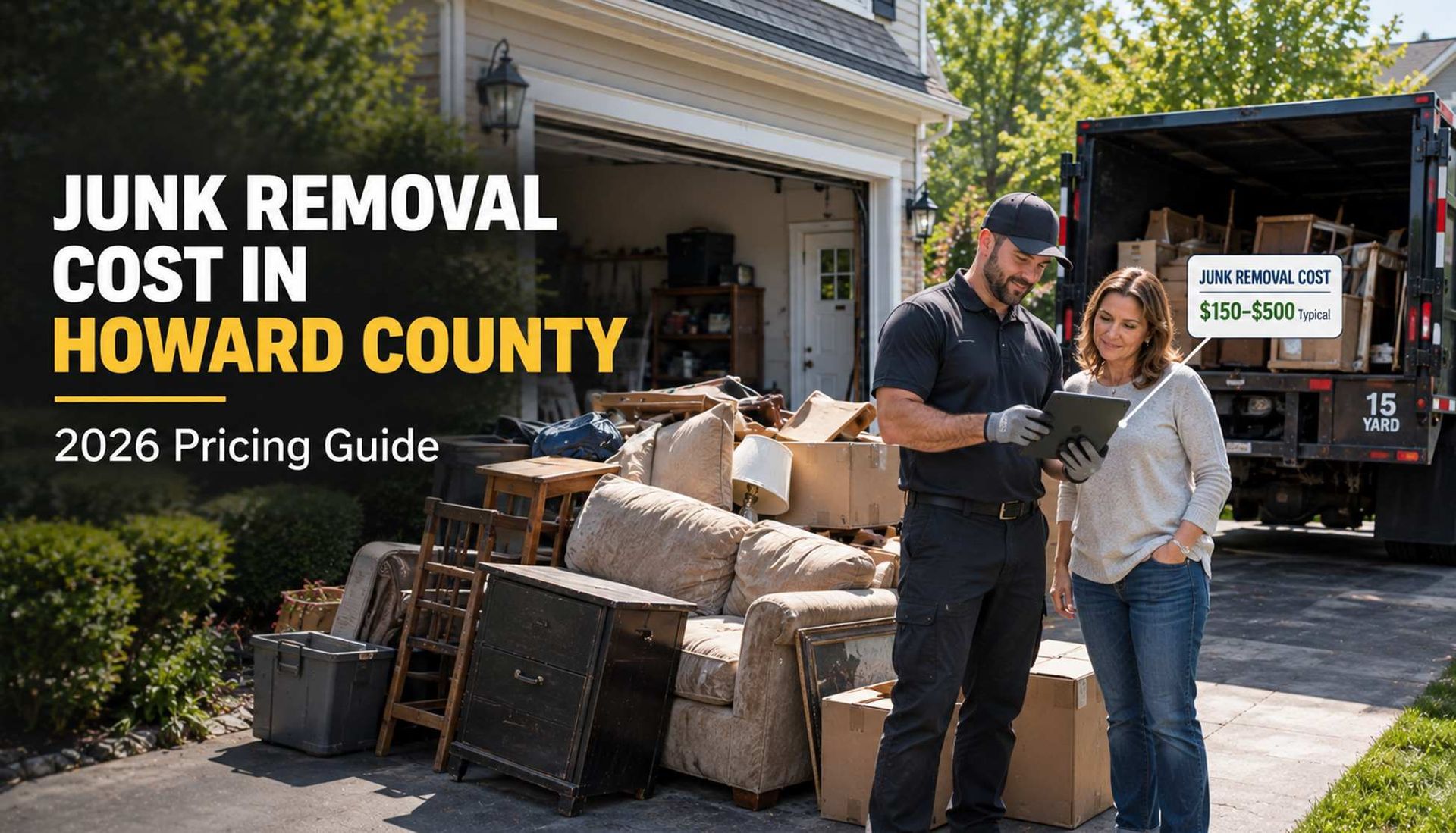
Booking a dedicated Estate Cleanout Service removes this burden completely. A professional team brings the trucks, dollies, and labor to clear out remaining items room by room, carry everything out safely, and sweep the floors clean.
If you only have a single truckload or a small pile of leftovers rather than a whole house, scheduling standard Junk Removal in Howard County is a fast, budget-friendly way to cross the finish line.
What to Do Next
Decluttering an estate is a marathon, not a sprint. Take it one room at a time, lean on family members for support, and remember that you do not have to carry every heavy piece of furniture yourself.
Before scheduling your final property clear-out, make sure you have:
- Secured all wills, financial papers, and family photos.
- Distributed requested heirlooms to heirs and relatives.
- Arranged local pickups for large furniture donations.
- Grouped leftover unwanted items for quick loading.
When you are ready for fast, compassionate, and respectful help clearing out the remaining items in Howard County, call the team at JT's Junk & Trash Removal for an honest, upfront quote.
FAQ
Where do you start when decluttering an estate?
Start by locating and securing all vital documents, wills, financial records, and personal family heirlooms. Once those are safe, begin clearing low-emotion rooms like bathrooms, pantries, and laundry rooms to build momentum.
How long does it take to declutter a house for an estate cleanout?
For a family working on weekends, sorting and decluttering an average three-bedroom home usually takes two to four weeks. Once sorting is finished, a professional hauling crew can clear out the remaining unwanted items in just one or two days.
What should you not throw away during an estate cleanout?
Never toss uninspected financial records, vehicle titles, real estate deeds, military records, old family photo albums, or fine jewelry. Also, avoid throwing away wet paints, cleaning chemicals, and electronics in regular trash, as Howard County requires specialized disposal.
Where can I donate furniture and household goods in Howard County?
Gently used furniture, appliances, and building materials can be donated to the Habitat for Humanity ReStore in Columbia. Boxed clothing, linens, and kitchen items can go to local thrift centers and community charities across Ellicott City and Columbia.
What is the fastest way to clear out an estate?
The fastest method is a hybrid approach: have the family spend two to three days tagging personal keepsakes and heirlooms, and then hire a full-service cleanout company to sort, haul, donate, and dispose of everything else in one single visit.