Where Do Junk Removal Companies Take the Junk? What Happens After Pickup Junk in Maryland
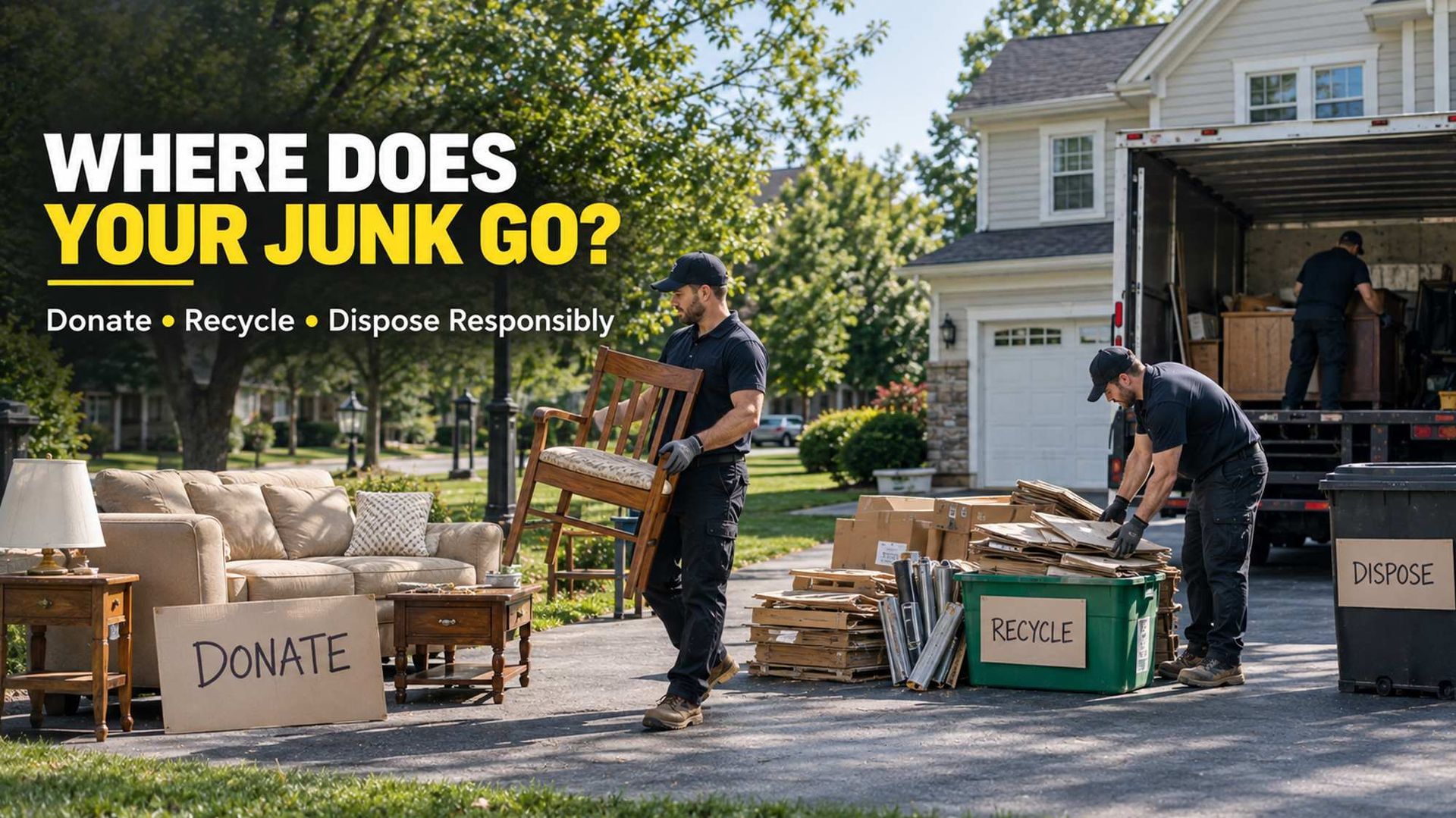
Where do junk removal companies take the junk? Professional junk haulers take your items to four main destinations: local Maryland donation centers for usable goods, specialized recycling facilities for metals and electronics, green-waste centers for organic debris, and finally, landfills for non-recyclable waste. The primary goal is always to minimize landfill use.
At JT’s Junk & Trash Removal, founded by Maryland native John Thomas (JT), we have spent years hauling away clutter from homes and businesses across Charles County, Prince George’s County, Montgomery County, and beyond. We know our neighbors care deeply about our local environment. When you watch our trucks drive away from your driveway, you might wonder what happens next. In this guide, we will walk you through the entire junk disposal process so you know exactly where your unwanted items end up.
Where Does Junk Go After Removal? The 4-Step Process
When you hire a professional, eco-conscious team, your junk does not just get dumped into a giant hole in the ground. Here is the step-by-step journey of your materials.
Step 1: Collection and Sorting
The journey starts in your driveway or at a local sorting warehouse. As our crew loads the truck, we strategically separate materials into different categories. Metals go in one pile, electronics in another, and true household trash in the back. Sorting is the single most important step for successful junk removal recycling.
Step 2: Furniture Donation Centers
It is amazing how many items are thrown away that still have years of life left in them. If a couch, dining table, or dresser is structurally sound, we take it to local donation centers. Charities like Goodwill, the Salvation Army, and Habitat for Humanity ReStore clean these items and provide them to families in need. Furniture donation is the best way to help the community while keeping bulky items out of the trash.
Step 3: Recycling Facilities
If an item is broken but made of useful materials, it goes to recycling facilities. Scrap metal, clean cardboard, and hard plastics are sorted, melted down, and processed by specialized plants to create entirely new products.
Step 4: The Landfill (The Last Resort)
Only the items that cannot be donated, reused, or recycled make it to the landfill. Because of our strict sorting process, we achieve high levels of landfill diversion. This means we keep as much volume out of the local dumps as possible, extending the life of the landfill and protecting the soil.
Eco-Friendly Junk Removal: How We Recycle Specific Items
Different types of junk require highly specific disposal methods. Here is how we practice
eco-friendly junk removal for common household and commercial items.
Appliance Recycling
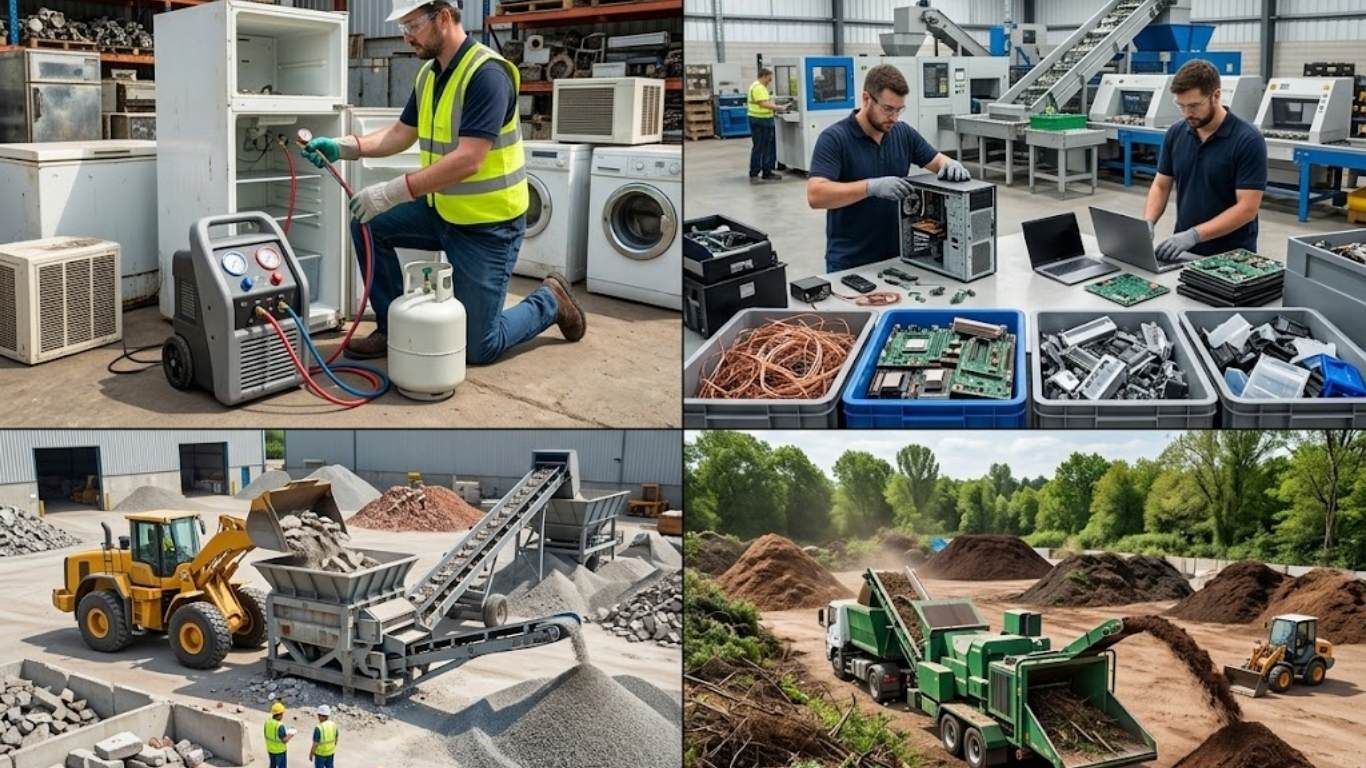
Did you know that dumping a refrigerator in the woods is a federal crime? Old refrigerators, freezers, and air conditioners contain chemical refrigerants that can damage the ozone layer. Appliance recycling is a regulated process. We take appliances to facilities where trained technicians safely drain the Freon according to EPA standards. Once the chemicals are removed, the heavy steel and aluminum body is crushed and melted for scrap metal.
Electronic Waste Recycling
Our modern world runs on screens, but throwing them in the garbage is dangerous. Electronic waste recycling handles the safe disposal of old televisions, computers, and cell phones. Older tube TVs contain pounds of toxic lead, while newer flat screens contain mercury. Certified e-waste centers safely extract these toxic heavy metals. Then, they harvest valuable precious metals like gold, silver, and copper from the internal circuit boards.
Construction Debris Disposal
When a home is remodeled or an office is gutted, it creates mountains of heavy waste. Construction debris disposal is processed differently than household junk. Thanks to construction waste recycling, materials like concrete, old drywall, and untreated lumber rarely sit in a landfill. Concrete is fed into massive crushers to become base gravel for new roads, and clean wood is chipped for industrial fuel. If you are a contractor managing a large job site, using a reliable Commercial Junk Removal Service ensures your site stays clean, safe, and fully compliant with state disposal laws.
Yard Waste Disposal
After a major landscaping project, property owners are left with massive piles of brush and branches. Yard waste disposal is highly eco-friendly. Instead of taking up valuable space in a landfill, organic yard waste is delivered to local green-waste recycling centers where it is chipped into landscaping mulch or processed into nutrient-rich compost for local farms.
First-Hand Experience: A Real Estate Cleanout Case Study
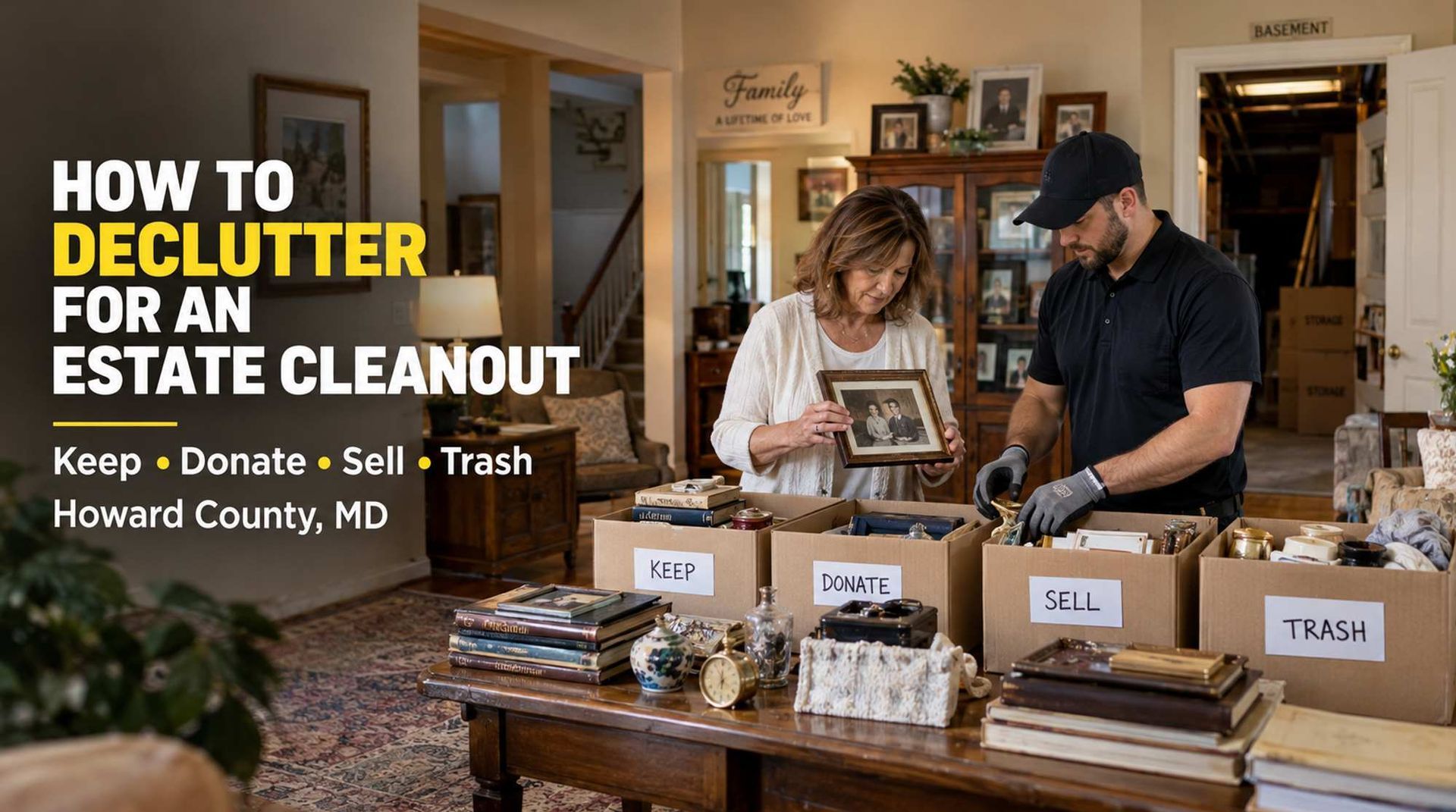
To show you how this works in the real world, consider a recent estate cleanout our team completed. We removed three full truckloads of items from a 4-bedroom home.
- Donated: We took two couches, a dining set, and bags of winter coats directly to a local charity.
- Recycled: Old metal shelving, a broken washer, and outdated computers went to specialized facilities.
- Disposed: Only one truckload (mostly ruined carpets and damaged materials) actually went to the landfill.
By taking the time to sort, we successfully diverted roughly 65% of that home's waste away from the local dump.
Pitfalls: The Danger of Illegal Dumping
One of the biggest mistakes property owners make is hiring the cheapest "guy with a truck" they find online.
If someone offers to haul your junk for an unbelievably low price, there is a high chance they are illegally dumping it in the woods or behind a shopping center. Illegal dumping harms the environment and carries massive fines. If a dumped item is traced back to you, you can be held legally responsible.
Professional haulers always practice responsible waste disposal. We pay the correct tipping fees at transfer stations and take the time to visit proper recycling centers. When you book a proper Trash Removal service Maryland, you get peace of mind knowing the job is done legally.
Why Landfill Diversion Matters in Maryland
Landfills are running out of room. According to the EPA, the practice of diverting waste away from the dump is crucial for our future.
When organic matter and mixed recyclables are buried in a landfill, they break down slowly and release methane, a powerful greenhouse gas. By actively sorting materials, professional junk haulers help reduce these harmful emissions. Hiring a dedicated Hauling Service in Maryland does more than clean up your property—it actively protects the local ecosystem.
Ready to Clear Your Space? What to Do Next
Now that you know the truth about the waste disposal process, you can make a smart choice for your next cleanout. Look for a team that values recycling and community donation over simply taking everything to the dump.
If you need a trustworthy Junk Removal Service in Charles, MD or the surrounding areas, we are ready to help. At JT's Junk & Trash Removal, we do all the heavy lifting, sorting, and eco-friendly disposal for you.
FAQs About Where Do Junk Removal Companies Take the Junk?
Where does most of the junk from a house cleanout go?
Most of the junk from a house cleanout goes to local donation centers or recycling facilities. Only the items that are completely broken, heavily soiled, or unrecyclable are taken to the local landfill.
Do junk removal companies really donate furniture?
Yes. Reputable junk removal companies partner with local charities like Goodwill and Habitat for Humanity to donate gently used couches, tables, and dressers to families in need.
How are appliances recycled?
Appliances are taken to specialized recycling centers where trained technicians safely drain toxic refrigerants, like Freon, according to EPA regulations. Once the chemicals are removed, the metal body is crushed and recycled.
What happens to construction debris?
Construction debris is heavily recycled; concrete is crushed into base gravel for new roads, while untreated wood is chipped down to be used as mulch or industrial biomass fuel.
What items cannot go to a landfill?
Hazardous materials such as wet paint, motor oil, toxic cleaning chemicals, car batteries, and electronics containing heavy metals cannot go to a landfill and must be processed by specialized hazardous waste facilities.